Finding a reliable source for high-performance cellulose ethers often begins with a specific search for hydroxyethylcellulose where to buy, as the material's consistency directly affects the stability of end-use formulations. Whether you are formulating professional detergents, paints, or specialized pharmaceutical capsules, the quality of the thickening agent determines the viscosity, clarity, and shelf-life of your product. In the competitive landscape of specialty chemicals, procurement is not just about finding a vendor, but about securing a supply chain that guarantees technical stability.
The criticality of this selection stems from the diverse dissolving properties required across different industries. For instance, the detergent sector demands instant-dissolving types that work at room temperature to ensure high permeability and rapid thickening, whereas the construction industry relies on hot-dissolving variants to improve water retention and workability in mortars. When buyers evaluate options among HEC, Hot Products, HPMC, Other Exclusive Echmicals, and RDP, they are essentially balancing chemical purity against the specific rheological needs of their application.
Navigating these technical requirements requires a partner who combines large-scale production capacity with rigorous laboratory verification. By analyzing the core metrics of purity, ash content, and fluid density, procurement managers can mitigate the risk of batch-to-batch variation. This guide examines the critical factors in sourcing high-grade cellulose ethers and provides a framework for identifying a manufacturer capable of delivering stable, industrial-scale solutions. For those seeking a verified production partner, you can explore professional options for hydroxyethylcellulose where to buy to ensure your formulations meet international standards.


Procuring hydroxyethylcellulose (HEC) and hydroxypropyl methylcellulose (HPMC) requires a deep understanding of the chemical's role as a rheology modifier. In the specialty chemicals sector, these products are not interchangeable; they are engineered for specific interaction with water and other solvents. A buyer must first identify whether their application requires an instant-dissolving agent for room-temperature water or a hot-dissolving agent that activates above 60°C. This distinction prevents formulation failure and ensures the product achieves the desired viscosity within the required timeframe.
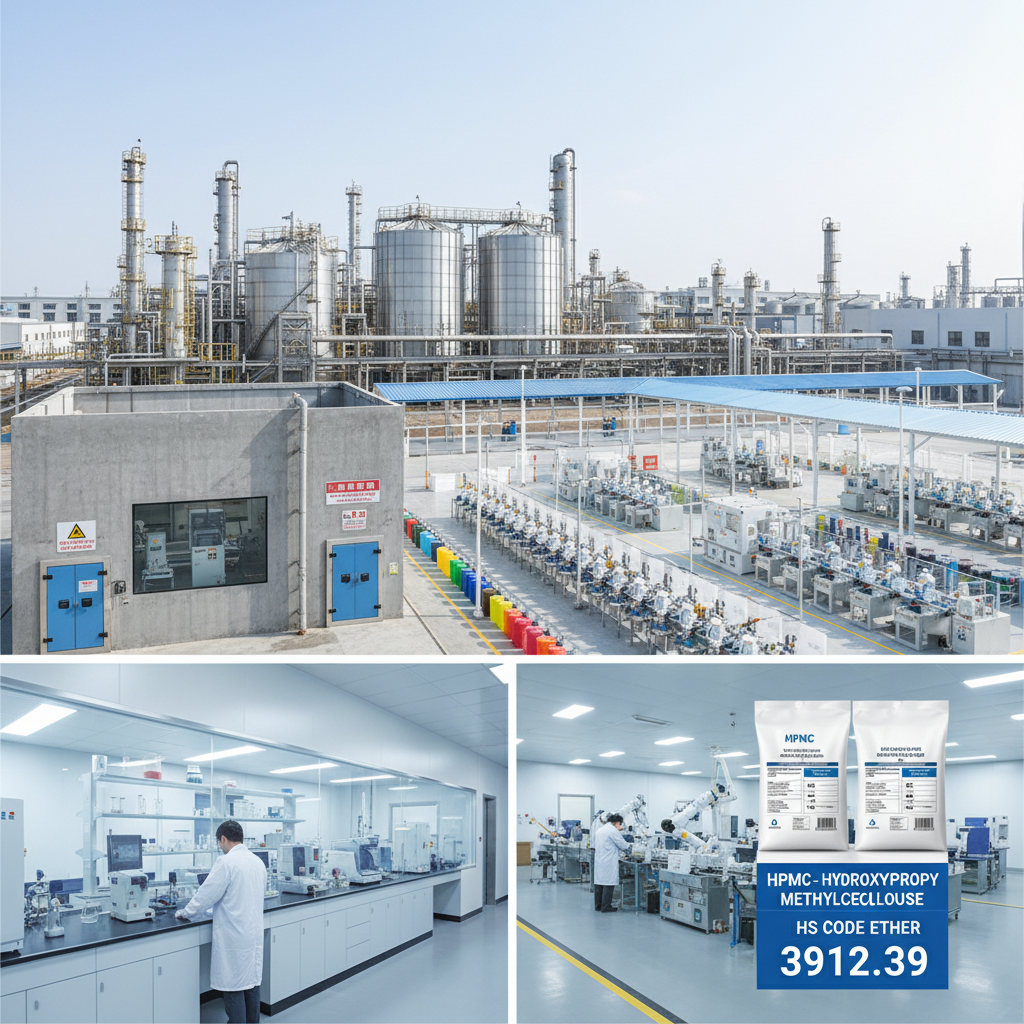
Beyond the chemistry, the scale of the manufacturer plays a pivotal role in supply security. A facility with a high annual capacity—such as the 60,000 tons for HPMC and 15,000 tons for HEC provided by Jingzuan Chemical—ensures that bulk orders are fulfilled without compromising lead times. Utilizing advanced production technology, such as German-engineered lines, allows for a level of molecular consistency that is unattainable in smaller, less automated plants, thereby reducing the risk of batch deviation in large-scale manufacturing.
When assessing a potential supplier, buyers should focus on three empirical indicators: ash ratio, density, and fluidity. The ash ratio, typically determined by burning a sample, should be less than 5%; a lower ratio indicates higher purity and fewer inorganic contaminants, which is essential for applications like pharmaceutical capsules or high-clarity paints. Lower ash content generally translates to better stability and fewer unwanted chemical reactions during the mixing process.
High purity in cellulose ethers is directly correlated with higher density and superior powder fluidity. In practical testing, purer HPMC powder flows more smoothly in a jar, ensuring rapid and uniform dispersion when added to liquids, which eliminates the formation of "fish-eyes" or clumps that can ruin a production batch.
Furthermore, viscosity gain time is a critical performance metric. High-standard HPMC used in the detergent industry must gain its full viscosity within 30 to 60 minutes at room temperature. This ensures that the production cycle is efficient and that the final product, such as shampoo or liquid soap, maintains a consistent texture without leaving stains or separating after several weeks of storage.
The value of high-purity cellulose ethers lies in their multifunctional capacity to act as thickeners, emulsifiers, and film-forming agents simultaneously. In the detergent industry, an instant-dissolving HPMC doesn't just add thickness; it acts as a dispersant that keeps active ingredients evenly distributed throughout the liquid. This multifunctionality reduces the need for additional additives, simplifying the formulation process and reducing the overall raw material cost.
For construction applications, the core value is found in water retention. High-grade HPMC prevents the rapid evaporation of water from mortar or wall putty, which prolongs the open time and prevents the material from cracking or drooping during application, directly improving the workability and longevity of the structure.
Ultimately, the reliability of these chemicals manifests in the final product's stability. Whether it is ensuring that a tile adhesive remains anti-cracking or that a liquid soap remains transparent and stain-free, the chemical purity of the cellulose ether is the primary driver of quality. This is why professional buyers insist on third-party testing and ISO 9001 certified production standards to validate these claims.
The selection between instant-dissolving and hot-dissolving types is determined by the operating temperature of the production line. Instant-dissolving HPMC is engineered for high permeability and immediate solubility in room-temperature water, making it the gold standard for the personal care and detergent sectors. In these environments, adding heat to the mixing process could degrade other active ingredients, making room-temperature solubility a non-negotiable requirement.
Conversely, hot-dissolving HPMC is optimized for the construction and ceramic industries, where it only activates above 60°C. This property is essential for industrial slurries and mortars where the chemical must remain dormant until specific processing conditions are met. The following data illustrates the relative application focus based on the dissolving property required for different industrial sectors.
In the construction field, the use of HPMC and RDP is focused on improving the structural integrity of building materials. For EIFS mortar and tile adhesives, the primary goal is anti-drooping and anti-cracking. The selection logic here prioritizes water retention and open-time prolongation, ensuring that the mortar does not dry too quickly, which would otherwise lead to poor bonding and premature failure of the wall surface.
In the consumer goods sector, specifically for shampoo and toothpaste, the focus shifts toward liquid transmittance and viscosity stability. The HPMC must be completely soluble to avoid any turbidity in the final product. By acting as a film-forming agent and thickener, it provides the smooth, luxurious feel expected by consumers while ensuring that the product remains stable across different temperature ranges during shipping and storage.
The trend in cellulose ether production is moving toward higher automation and tighter environmental controls. Modern facilities are investing in gas recycling tanks and advanced water treatment systems to ensure that production is not delayed by environmental inspections. This systemic approach ensures that the lead time for bulk orders remains short, even as global environmental regulations become more stringent.
Technologically, there is a growing demand for "custom-viscosity" grades. Manufacturers are now utilizing advanced laboratory equipment to test liquid transmittance rates and water retention with higher precision, allowing them to tailor the HEC or HPMC molecular weight to the specific needs of the buyer. This shift from "standard grades" to "application-specific solutions" allows buyers to optimize their formulations for maximum efficiency.
Furthermore, the integration of German technology in production lines, as seen in the recent expansions of major Chinese producers, is bridging the gap between East Asian capacity and European precision. This evolution ensures that global buyers can access high-volume production without sacrificing the strict quality controls required by ISO and CE certifications.
One of the most frequent challenges for buyers is the inconsistency between sample quality and bulk delivery. To mitigate this, professional suppliers provide samples from different batches to demonstrate quality stability. Verifying the purity through density tests and checking the fluidity of the powder before the bulk order is the most effective way to prevent production downtime caused by substandard materials.
Another significant hurdle is the logistics of hazardous or bulk chemical transport. Proximity to major ports—such as being within 300 km of Tianjin sea port—can significantly reduce shipping costs and lead times. Buyers should evaluate the manufacturer's infrastructure, including their raw material storage (such as refined cotton warehouses) and their ability to handle liquid alkali and propylene oxide safely.
Finally, the lack of technical support can lead to improper product application. A supplier that provides experienced chemical solutions rather than just a product is far more valuable. Having a team of application engineers who can help adjust viscosity or water retention based on the buyer's specific environmental conditions is a key differentiator in the specialty chemicals market.
| Evaluation Metric | Standard Grade | High-Purity Grade | Impact on End Product |
|---|---|---|---|
| Ash Ratio | 5% - 8% | < 5% | Clarity & Stability |
| Dissolving Speed | Slow / Clumpy | Rapid / Smooth | Production Efficiency |
| Viscosity Gain | 120+ Minutes | 30 - 60 Minutes | Cycle Time |
| Powder Fluidity | Moderate | High / Smooth | Dispersion Quality |
| Water Retention | Basic | Enhanced | Anti-Cracking/Droop |
| Certification | Basic Local | ISO 9001 / CE | Market Compliance |
The most reliable way to verify purity is through three simple tests: checking the ash ratio by burning (it should be under 5%), weighing the product to check density (higher purity usually means higher density), and observing the powder's fluidity. High-purity powder flows more smoothly when rolled in a glass jar. We recommend requesting samples from different batches to ensure stability before committing to a bulk order.
Instant dissolving HPMC is soluble in room temperature water and is primarily used in the detergent and cosmetic industries for products like shampoo and liquid soap. Hot dissolving HPMC requires water temperatures above 60°C to dissolve and is mainly used in construction, ceramics, and textiles to improve water retention and workability in mortars and putties.
Water retention prevents the mortar from drying out too quickly, which is critical for ensuring the cement hydrates properly. This prolongs the "open time" for workers to adjust tiles or putty, and prevents the formation of cracks and drooping on vertical surfaces, resulting in a much stronger and more durable bond.
No, HEC and HPMC have different chemical structures and performance characteristics. While both are thickeners, HEC is often preferred in specific paint and personal care formulations for its unique rheology. The choice depends on the desired viscosity, the solvent system, and whether the application requires specific properties like high permeability or film-forming capabilities.
You should look for ISO 9001 certification for quality management and CE certification for market compliance, especially for construction materials. Additionally, ensure the manufacturer accepts third-party testing to verify their technical data sheets. A professional manufacturer will have a dedicated lab to test viscosity, purity, and liquid transmittance for every batch.
Large-scale production capacity, such as 60,000 tons per year, ensures that a supplier can handle large bulk orders without increasing lead times. More importantly, larger facilities often invest more in automated technology (like German production lines), which leads to higher batch-to-batch consistency and lower risk of product variance compared to smaller workshops.
Sourcing the right cellulose ether is a technical decision that balances purity, solubility, and production scale. Whether the priority is the instant dissolution required for high-end detergents or the water retention needed for industrial mortars, the core of a successful formulation lies in the chemical stability of the thickening agent. By focusing on empirical metrics like ash ratio and fluidity, and partnering with manufacturers who employ advanced production technology, businesses can ensure their products remain competitive and consistent in the global market.
Selecting a supplier who provides not just raw materials, but integrated chemical solutions, is the most effective way to optimize production efficiency. For organizations looking to upgrade their current formulations or secure a stable supply of high-purity HEC and HPMC, visiting a specialized production facility can provide the necessary transparency. We invite you to explore the professional capabilities and technical solutions available at www.cnjzchemical.com to find the exact grade for your application.